Sneakers are part of everyday life, whether you wear them for walking, commuting, gym sessions, running errands, or weekend outings. But frequent use, dust, sweat, rain, and improper storage can make even a good pair look worn out sooner than expected.
The good news is that a few simple habits can help your sneakers stay cleaner, more comfortable, and in better condition for longer. You don’t need expensive cleaning products or complicated routines, just the right care for the materials and the way you use your shoes.
A good pair of sneakers can become your everyday favourite. You might wear them for morning walks, office commutes, college, gym sessions, shopping trips, or weekend outings. But after weeks of regular use, dust, sweat, stains, creases, and worn-out soles can make them look older than they really are.
The good news is that you do not need an expensive sneaker-care kit to keep your shoes in better condition. A few simple habits—such as cleaning dirt early, drying them properly, and storing them correctly can help preserve their appearance and usability.
This is particularly useful in India, where sneakers may face dusty roads, hot weather, sudden rain, muddy paths, and humid conditions. Even premium footwear can deteriorate faster if it is repeatedly exposed to moisture or cleaned with unsuitable products.
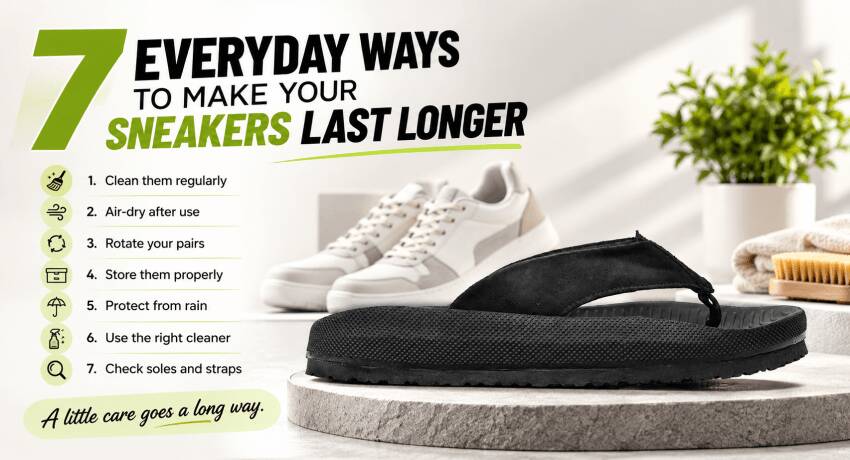
Here are seven everyday ways to make your sneakers last longer, with practical examples, care tips, and common mistakes to avoid.
Why Is Sneaker Care Important?
Sneaker care is not just about keeping your shoes looking fresh. Regular maintenance can help protect the upper material, reduce unpleasant odours, preserve the shoe’s shape, and prevent dirt from building up in seams and textured surfaces.
Here are some of the main benefits:
- Better appearance: Regular cleaning helps sneakers look presentable for longer.
- Improved comfort: Drying shoes and airing the insoles can help reduce persistent dampness and odour.
- Protection of materials: Gentle cleaning can remove dirt without unnecessarily damaging fabric, leather, or synthetic finishes.
- Better value for money: Taking care of your footwear may delay the need to replace it because of avoidable cosmetic damage.
- Less unnecessary waste: Maintaining shoes for longer can reduce how frequently you need to buy replacements.
Care cannot prevent all wear and tear. Soles, cushioning, adhesives, and upper materials naturally deteriorate with use. The goal is to avoid damage that could have been prevented.
1. Clean Dirt and Stains Before They Set
One of the easiest ways to extend the life of your sneakers is to clean them regularly instead of waiting until they look extremely dirty.
Dust, mud, and road grime can collect around stitching, mesh panels, rubber soles, and other hard-to-reach areas. If left for a long time, some stains become more difficult to remove.
How to Clean Your Sneakers
- Remove loose dust and dried mud using a soft brush.
- Mix a small amount of mild soap with water.
- Dip a soft cloth into the solution and gently clean the affected areas.
- Wipe away soap residue using a clean, damp cloth.
- Let the sneakers air-dry at room temperature.
Use gentle movements, particularly on mesh, knit, and delicate synthetic materials. Always check the manufacturer’s care instructions before cleaning.
Example
Imagine wearing white sneakers to work every day. After a week of walking along dusty streets, the sides and rubber soles begin to look grey. Instead of waiting until the weekend for an aggressive scrub, wipe away the surface dirt when you get home.
That small habit can make routine cleaning easier.
Pro tip: Test your cleaning solution on a small, inconspicuous area first. Avoid bleach, harsh chemicals, and rough scrubbing unless the manufacturer specifically approves the method for your shoe material.
2. Let Your Sneakers Dry Completely
Moisture is one of the biggest challenges for everyday footwear. Sweat, rain, damp socks, and humid weather can leave sneakers wet inside and out.
Wearing damp shoes repeatedly can contribute to unpleasant odours and discomfort. Prolonged moisture may also affect some materials and adhesives.
The Right Way to Dry Sneakers
- Remove the insoles if they are designed to come out.
- Loosen the laces to improve airflow.
- Wipe away excess surface water with a clean cloth.
- Stuff the shoes loosely with plain paper to absorb moisture, replacing it when it becomes damp.
- Leave them in a well-ventilated, shaded area until fully dry.
Avoid placing sneakers directly under strong sunlight for long periods. Do not use a hair dryer, room heater, or clothes dryer unless the manufacturer explicitly permits it. Excessive heat can damage adhesives, deform materials, or affect the shoe’s shape.
Example
If you get caught in a sudden monsoon shower while travelling, resist the temptation to leave your sneakers near a heater or in direct afternoon sunlight. Remove the insoles, absorb excess water, and let the shoes dry naturally with good airflow.
Pro tip: If your sneakers become thoroughly soaked, allow extra drying time before wearing them again.
3. Rotate Between Two Pairs When Possible
Wearing the same sneakers every single day gives them little time to dry between uses. Rotating between two pairs can help reduce repeated exposure to sweat and moisture.
This is especially useful if you walk long distances, exercise frequently, or commute in hot and humid weather.
Benefits of Rotating Your Sneakers
- Gives each pair more time to air out.
- Helps reduce continuous moisture build-up.
- Allows you to use different shoes for different activities.
- Makes it easier to notice wear or damage before it becomes more serious.
Example
Suppose you walk to the office five days a week. You could wear one pair on Monday, Wednesday, and Friday, and use another pair on Tuesday and Thursday.
You do not need several expensive pairs. Even two suitable pairs can provide more flexibility than relying on one pair for every activity.
A Simple Rotation Guide
| Activity | Suitable approach |
|---|---|
| Daily commuting | Use comfortable everyday sneakers |
| Gym workouts | Use shoes appropriate for your exercise |
| Long walks or runs | Use footwear designed for the activity |
| Rainy-day errands | Choose shoes suited to wet conditions and allow them to dry afterwards |
| Occasional outings | Reserve a cleaner pair if you want to keep it looking fresh |
Rotation is optional, not a requirement. If you own only one pair, regular cleaning, proper drying, and suitable storage still make a difference.
4. Store Your Sneakers in a Cool, Dry Place
Where you store your sneakers can affect their condition over time. Leaving them in direct sunlight, a damp corner, or a crowded pile can expose them to unnecessary wear.
A good storage spot should be dry, reasonably cool, and well ventilated.
Best Practices for Sneaker Storage
- Keep sneakers away from prolonged direct sunlight.
- Avoid storing damp shoes in closed boxes or plastic bags.
- Let them dry completely before putting them away.
- Store them in a clean shoe rack or their original box when appropriate.
- Use shoe trees or suitable shoe forms if you want to help preserve the shape of structured sneakers.
For leather sneakers, use care products designed for leather. Suede and nubuck generally need a dedicated brush and suitable cleaning products. Mesh sneakers should be handled gently to avoid damaging their fibres.
Example
If you return home after a hot day, do not immediately put sweaty sneakers into a closed cupboard. Let them air out first. Once dry, place them neatly on a rack away from direct sunlight.
Pro tip: Keep sneakers off damp floors, particularly during the monsoon. A clean, ventilated shelf is often a better choice than leaving footwear beside a wet entrance.
5. Wear Your Sneakers for the Right Activities
Not every sneaker is designed for every activity. Casual lifestyle sneakers, running shoes, gym shoes, and trail shoes may use different materials and construction methods.
Using a pair beyond its intended purpose can cause unnecessary wear.
For example, soft lifestyle sneakers may not provide the traction or support you want for trail running. Similarly, running shoes used daily for muddy gardening or heavy outdoor work may become dirty and worn faster than expected.
Match Your Sneakers to Your Routine
| Activity | Footwear to consider | Why it helps |
|---|---|---|
| Casual outings | Lifestyle sneakers | Designed for everyday styling and walking comfort |
| Running | Running shoes | Designed for repeated running movements |
| Gym training | Training shoes suitable for your workouts | May offer a more appropriate base for gym exercises |
| Trail walking | Trail footwear | Often provides more traction and protection |
| Rainy-day errands | Shoes suited to wet conditions | May be easier to clean and more appropriate for damp surfaces |
| Office commuting | Comfortable everyday sneakers | Suitable for routine walking and travel |
The right shoe still needs to fit comfortably and suit your individual needs. No footwear type is completely resistant to damage.
Example
If you own a clean pair of white leather sneakers for everyday wear, consider using a separate pair for muddy park walks or outdoor chores. This reduces the amount of dirt and moisture your preferred pair has to handle.
6. Take Care of the Laces, Insoles, and Soles
Sneaker maintenance is not limited to the outer fabric. Laces, insoles, and outsoles also need attention.
Dirty laces can make clean sneakers look neglected, while damp insoles may hold odour. Dirt lodged in the outsole can also reduce traction on some surfaces.
How to Maintain Each Part
Laces: Remove them when cleaning the shoes. Wash gently in soapy water if the material allows, then air-dry. Replace laces that are frayed, stretched, or damaged.
Insoles: Remove them if possible and let them air out separately. Clean them according to the manufacturer’s instructions and make sure they dry completely before reinserting them.
Outsoles: Use a soft brush to remove dirt and small stones. Avoid digging aggressively into the rubber or cutting away material.
Heel area: Untie or loosen the laces before taking your shoes off. Pulling your foot out while crushing the heel can damage the structure over time.
Toe shape: Use an appropriate shoe form for structured sneakers if creasing is a concern. Avoid forcing a shoe into a shape that does not match its design.
Example
Your sneakers may look clean after wiping the upper, but the laces might still be grey and the soles covered in dust. Removing and cleaning the laces separately can make the entire pair look noticeably fresher.
Pro tip: A five-minute check once a week is often enough to notice loose stitching, worn laces, or dirt collecting in the tread.
7. Avoid Overwashing and Harsh Cleaning Methods
Cleaning your sneakers is important, but cleaning them too aggressively can cause damage.
Putting every type of sneaker into a washing machine may seem convenient, yet machine washing can damage certain uppers, adhesives, decorative elements, and shoe structures. Some manufacturers allow machine washing for particular models, while others advise against it.
The safest approach is to follow the care instructions for your specific pair.
Common Sneaker-Cleaning Mistakes
| Mistake | Why it can be a problem | Better approach |
|---|---|---|
| Using bleach on every material | May discolour fabric or damage finishes | Use a suitable cleaner for the material |
| Scrubbing mesh aggressively | Can fray or damage fibres | Use a soft brush and gentle pressure |
| Drying shoes with high heat | May deform materials or weaken adhesives | Air-dry at room temperature |
| Leaving stains for months | Some stains become harder to remove | Spot-clean promptly |
| Soaking leather or suede | May leave marks or affect texture | Use material-specific care products |
| Putting damp shoes in a closed box | Traps moisture | Let them dry fully before storage |
| Washing every pair in a machine | Some shoes may be damaged by agitation and water | Check the manufacturer’s instructions first |
Example
If you have suede sneakers with a water mark, scrubbing them with a wet cloth and ordinary detergent may make the texture or stain worse. A suede brush and a suitable suede cleaner are usually more appropriate.
For leather sneakers, use a product intended for leather. For mesh or knit uppers, a small amount of mild soap and gentle cleaning may be sufficient.
Pro tip: Do not use one cleaning method for every sneaker in your collection. Material-specific care is safer than assuming all shoes can be treated alike.
Quick Sneaker-Care Comparison: Daily, Weekly, and Monthly Tasks
You do not need to spend hours maintaining your shoes. A simple schedule can help you stay consistent.
| Frequency | What to do | Approximate effort |
|---|---|---|
| After wearing | Remove loose dirt and allow shoes to air out | 1–3 minutes |
| After rain or heavy sweating | Remove insoles if possible and dry thoroughly | Depends on drying time |
| Weekly | Inspect laces, soles, and visible stains | 5 minutes |
| When visibly dirty | Clean the affected areas gently | 5–15 minutes |
| Monthly or as needed | Check for worn tread, loose stitching, and shape changes | 5–10 minutes |
These times are practical estimates, not fixed requirements. Cleaning frequency depends on how often you wear the shoes, the material, and the conditions in which you use them.
How Do You Know When Sneakers Need Replacing?
Even with excellent care, sneakers eventually wear out. Cleaning can improve appearance, but it cannot restore worn-out cushioning, repair every damaged adhesive bond, or make a deteriorated outsole safe again.
Look for these signs:
- The outsole is significantly worn or losing traction.
- The upper has tears or damaged seams.
- The sole is separating from the upper.
- The shoe no longer fits securely.
- The cushioning or structure has noticeably deteriorated.
- You experience new discomfort during use.
For casual sneakers, replacement may depend largely on fit, structure, and condition. For running or sports shoes, performance and support may also matter. If the shoes are used for an activity that requires reliable grip or protection, do not keep wearing them simply because they still look good.
Frequently Asked Questions
1. How often should I clean my sneakers?
Wipe away loose dirt as needed and clean visible stains promptly. A deeper clean may be necessary when the shoes become noticeably dirty or develop odour. The ideal frequency depends on the material and how often you wear them.
2. Can I wash sneakers in a washing machine?
It depends on the shoe. Some models may be machine-washable according to their manufacturer, but others can be damaged by agitation, water, or detergent. Check the care label or manufacturer’s instructions before trying it.
3. Is sunlight good for drying sneakers?
Short exposure to indirect daylight may be fine for some shoes, but prolonged direct sunlight can fade colours or affect certain materials. Air-drying in a ventilated, shaded place is generally a safer default.
4. How can I stop my sneakers from smelling?
Let them dry completely between uses, air out removable insoles, wear clean socks, and clean the shoes according to their material. If odour persists despite proper care, check whether the insoles need cleaning or replacement.
5. How can I keep white sneakers clean?
Remove dust regularly, spot-clean marks promptly, and use a gentle cleaner appropriate for the material. Avoid harsh chemicals unless the manufacturer specifically recommends them.
6. Should I keep sneakers in their original box?
You can, provided the shoes are completely dry before storage. A box helps protect them from dust, but a ventilated rack may be preferable if your storage area is humid or the shoes need more airflow.
7. Does rotating sneakers really help?
Rotation gives each pair more time to dry and reduces continuous wear on a single pair. It can be useful if you wear sneakers daily, but proper care is still possible with just one pair.
Conclusion
Making your sneakers last longer does not require expensive products or complicated routines. Clean dirt before it builds up, dry your shoes properly, rotate pairs when possible, store them carefully, and use each pair for suitable activities. Paying attention to laces, insoles, soles, and material-specific cleaning methods can also help preserve their condition.
The most important habit is consistency. A few minutes of care after wearing your sneakers can be easier and more effective than trying to restore them after months of neglect.
Treat your sneakers well, and you may be able to enjoy their comfort and appearance for longer, while avoiding unnecessary replacements.