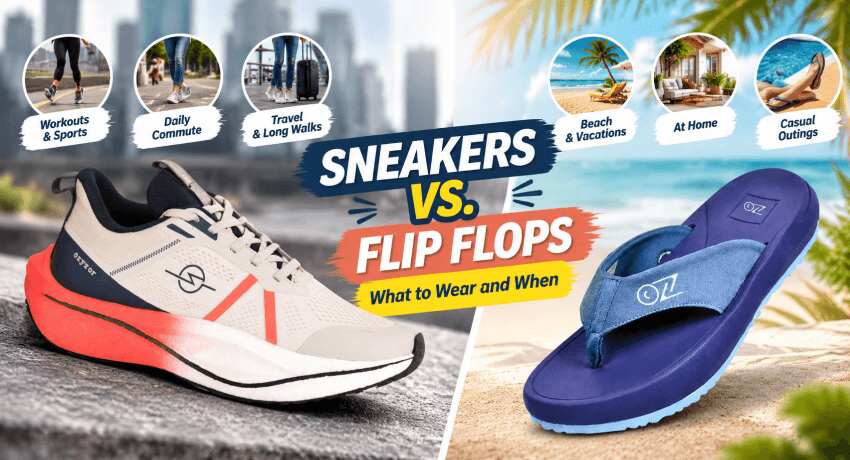
Sneakers and flip-flops are both popular footwear choices, but they serve different purposes. Sneakers are generally better for walking long distances, commuting, travelling, and activities that require support and stability. Flip-flops are convenient for short, casual trips, beach visits, and poolside use, especially in warm weather. The best option depends on where you are going, how long you will be on your feet, the surface you will walk on, and how much support your feet need.
Choosing between sneakers and flip-flops may seem like a simple fashion decision, but the right footwear can make a noticeable difference to your comfort throughout the day. Sneakers offer more coverage, stability, and cushioning, while flip-flops provide convenience, breathability, and an easygoing style.
Both options have their place in a practical wardrobe. The important thing is knowing when each one works best. Wearing flip-flops for a quick trip to the local shop is different from wearing them for a full day of sightseeing. Similarly, sneakers are excellent for many active situations, but they may feel unnecessarily warm when you are relaxing beside a swimming pool.
In this guide, we will compare sneakers and flip-flops based on comfort, support, style, weather, everyday activities, and foot health so you can choose the right pair for every occasion.
1. What Is the Difference Between Sneakers and Flip-Flops?
Sneakers are closed or mostly closed shoes designed to cover the feet. Depending on their construction, they may offer cushioning, arch support, a secure fit, and traction for walking, exercise, or everyday activities.
Flip-flops are open footwear usually made with a flat or slightly contoured sole and a Y-shaped strap that passes between the big toe and second toe. They are lightweight, easy to wear, and popular in warm weather.
The biggest difference is their construction. Sneakers generally hold the foot more securely and protect it from environmental hazards, while traditional flip-flops leave most of the foot exposed and may offer limited support.
| Feature | Sneakers | Flip-flops |
|---|---|---|
| Foot coverage | Covers most of the foot | Leaves most of the foot exposed |
| Support | Often provides better support and stability | Depends on design; basic pairs offer limited support |
| Cushioning | Usually moderate to substantial | Often thin, although supportive models exist |
| Breathability | Depends on material and design | Generally excellent |
| Convenience | May require laces or fastening | Easy to slip on and off |
| Best for | Walking, commuting, travel, and exercise | Beach trips, poolside use, and short casual outings |
| Protection | Better protection from bumps and debris | Limited protection from sharp objects and impacts |
| Style | Sporty, casual, streetwear, and smart-casual looks | Relaxed, summer, and beachwear looks |
Quick takeaway: Sneakers are usually the more practical option for extended walking and active days. Flip-flops are ideal for casual situations where convenience and ventilation matter more than extensive support.
2. When Should You Wear Sneakers?
Sneakers are a versatile footwear choice because they combine everyday style with practical features. The right pair can work for a variety of activities, from travelling to work to exploring a new city.
Walking long distances
If your day involves walking through markets, shopping malls, railway stations, airports, or city streets, sneakers are generally a better choice than thin, flat flip-flops.
A comfortable pair with suitable cushioning, a secure fit, and good traction can help reduce discomfort during extended periods on your feet. Look for enough room in the toe box so your toes are not squeezed together.
For example, if you are planning a full day of sightseeing in Jaipur, Mumbai, or Bengaluru, sneakers will usually provide a more practical combination of protection and support.
Travelling and commuting
Travel often involves standing in queues, climbing stairs, carrying luggage, and walking between transport connections. Sneakers can handle these demands more effectively than most basic flip-flops.
They are especially useful for:
- Airport transfers and long journeys.
- Exploring tourist attractions.
- Walking through busy streets.
- Using public transport.
- Carrying out several errands in one day.
Choose lightweight sneakers that are comfortable from the first wear. A secure heel fit and breathable upper can make a long travel day more manageable.
Exercise and sports
Sneakers are the clear choice for most activities that involve running, jumping, quick changes of direction, or repeated impact.
However, not every sneaker is designed for every sport. Running shoes, training shoes, walking shoes, and court shoes have different construction features.
For instance, running shoes are designed around forward movement and repeated impact, while court shoes typically prioritize lateral stability. Flip-flops are not suitable for running, gym workouts, or sports that require quick foot movements.
Work and everyday routines
If your job requires you to stand or walk for several hours, supportive sneakers may be a sensible option, provided they meet your workplace’s requirements.
They can also work well for college, casual office environments, grocery shopping, and other everyday routines.
The key is to choose a sneaker that fits your foot shape and activity. An expensive or fashionable pair is not automatically comfortable or supportive.
Outdoor activities
Sneakers can be useful for walking on paved paths, visiting parks, and taking easy urban trails. For rough terrain, slippery paths, or demanding hikes, purpose-built hiking shoes or trail footwear may be more appropriate.
Choose shoes with a sole suited to the surface you will encounter. Ordinary lifestyle sneakers may not provide enough grip or protection for every outdoor activity.
3. When Are Flip-Flops the Better Choice?
Flip-flops are popular for good reasons. They are simple, lightweight, easy to pack, and comfortable for many short, casual activities.
Beach holidays
Flip-flops are a natural choice for beachwear because they are easy to remove and convenient around sand. They can also be useful when walking between your accommodation and the beach.
For rocky shorelines, uneven ground, or areas where sharp objects may be present, consider sturdier footwear that offers better protection. Flip-flops can also become slippery when wet, depending on their material and tread.
Swimming pools and public showers
A pair of flip-flops or shower sandals can help keep your feet off potentially contaminated floors in swimming pools, changing rooms, and communal showers.
Dermatologists recommend wearing shower footwear in these settings because walking barefoot on damp public surfaces can expose your feet to the fungus responsible for athlete’s foot.
Choose a pair with a non-slip sole and rinse and dry it regularly.
Quick errands
For a short walk to a nearby shop, taking out the rubbish, or relaxing at home, flip-flops may be convenient if your feet tolerate them comfortably.
They are especially useful when you do not need to walk far or spend much time standing.
However, avoid assuming that all short trips are automatically safe in flip-flops. Wet floors, uneven pavements, stairs, and busy roads may call for footwear with a more secure fit.
Hot and humid weather
In warm and humid conditions, open footwear allows air to circulate around the feet. This can feel more comfortable than enclosed shoes, especially during relaxed activities.
In India’s summer months, flip-flops are commonly worn at home, on holidays, and for short outings. If you need more support but still want an open design, consider supportive sandals with adjustable straps, a contoured footbed, and a secure fit.
Relaxed, casual outfits
Flip-flops pair naturally with shorts, casual trousers, swimwear, and relaxed summer clothing. They are also easy to carry in a travel bag as a secondary pair of footwear.
For everyday outings, choose a design that fits properly and does not rub between your toes. If the straps cause irritation or your feet slide around on the sole, try a different style.
4. Sneakers vs. Flip-Flops: Which Is Better for Different Activities?
The best footwear depends on what you plan to do, not simply which style you prefer.
| Activity | Better choice | Why |
|---|---|---|
| Long-distance walking | Sneakers | Usually offer more cushioning, coverage, and stability |
| Running or jogging | Running sneakers | Designed for repeated impact and active movement |
| Gym workouts | Activity-specific training shoes | Provide a more secure fit for exercise |
| Beach relaxation | Flip-flops | Easy to remove and convenient on sand |
| Public showers | Flip-flops or shower sandals | Help keep feet off shared wet floors |
| City sightseeing | Comfortable walking sneakers | More suitable for extended walking |
| Quick trip nearby | Either, depending on conditions | Comfort, distance, and surface matter |
| Standing at work for hours | Supportive sneakers or suitable work shoes | Usually more practical for prolonged standing |
| Poolside lounging | Flip-flops or water-friendly sandals | Convenient in wet leisure settings |
| Hiking on uneven terrain | Hiking shoes or trail footwear | Designed for grip, stability, and terrain protection |
| Casual summer outfits | Either | Depends on the outfit and occasion |
| Wet, slippery pavement | Shoes with reliable traction | Ordinary flip-flops may slide or shift underfoot |
Remember that these are general guidelines. A well-designed supportive sandal may be more comfortable than a poorly fitting sneaker, so consider the actual construction and fit rather than relying on the footwear category alone.
5. Which Is Better for Foot Health?
Neither sneakers nor flip-flops are automatically good or bad for everyone’s feet. Their suitability depends on the fit, construction, duration of wear, activity, and your individual needs.
Support and cushioning
Many sneakers provide a more structured sole and greater cushioning than basic flip-flops. This can be helpful when walking for long periods or performing activities that place repeated demands on the feet.
Traditional flat flip-flops may offer little arch support or shock absorption. Wearing them for extended periods can contribute to discomfort, particularly for people who already experience heel pain, arch pain, or other foot problems.
However, supportive sneakers are not all identical, and some flip-flops are designed with contoured footbeds and additional cushioning.
Stability and walking
Sneakers usually fit more securely around the foot. This can be useful when climbing stairs, walking quickly, or navigating uneven surfaces.
With loose flip-flops, the toes may grip the footwear to prevent it from slipping away. The sole can also shift under the foot, increasing the chance of tripping in certain situations.
Avoid wearing ordinary flip-flops for sports, strenuous outdoor activities, or situations where you need dependable foot protection.
Blisters and skin irritation
Both footwear types can cause blisters if they fit poorly.
Sneakers may rub against the heel or toes, especially when they are too tight or worn without suitable socks. Flip-flops can cause irritation where the straps contact the skin, particularly between the toes.
To reduce friction, choose the right size, keep footwear clean and dry, and stop wearing a pair that repeatedly causes painful rubbing.
Sweating and hygiene
Flip-flops allow more airflow, but open footwear does not eliminate the need for foot hygiene. Sweat, moisture, and dirt can still accumulate around the toes and straps.
Sneakers can become damp from sweat, especially in hot weather. Let them dry thoroughly between uses, change out of wet socks, and rotate pairs when possible.
If you use flip-flops in public showers, clean them regularly and allow them to dry.
Who should be more careful?
People with diabetes-related nerve damage, poor circulation, reduced sensation, recurring foot injuries, or significant balance problems may need footwear that provides greater protection and a more secure fit.
If you have persistent foot pain or a diagnosed foot condition, ask a healthcare professional which footwear features are appropriate for you.
6. How to Choose Comfortable Sneakers
If sneakers are your everyday footwear, consider more than colour, brand, or current trends.
Check the fit. Your toes should have enough space to spread naturally, without pressing against the front or sides of the shoe. Your heel should feel secure without excessive slipping.
Choose suitable cushioning. The sole should feel comfortable for the activity you intend to perform. More cushioning is not necessarily better for everyone; stability and personal comfort matter too.
Consider breathability. Mesh or other breathable uppers can be useful in warm weather. For wet conditions, look for materials and construction suited to the environment.
Look for appropriate traction. The outsole should grip the surfaces where you plan to walk or exercise.
Match the shoe to the activity. Running, walking, gym training, and hiking place different demands on footwear. Select a pair designed for your main activity rather than expecting one shoe to perform every task.
Try them on at the right time. Feet may swell during the day, so trying shoes on later in the day can help you assess comfort. Walk around in both shoes before buying and avoid pairs that cause pressure or pain immediately.
7. How to Choose Better Flip-Flops
If you enjoy wearing flip-flops, you do not necessarily need to give them up. Instead, select a pair that is appropriate for your feet and the situation.
- Choose a supportive footbed: A contoured sole may offer more support than an entirely flat design.
- Check the flexibility: The footwear should bend where the toes naturally bend, but it should not fold or twist excessively through the middle.
- Get the right size: Your heel and toes should remain within the edges of the sole.
- Look for reliable traction: A textured outsole can help improve grip on suitable surfaces.
- Avoid irritating straps: The thong or straps should not dig into the skin or cause rubbing.
- Replace worn-out pairs: Cracked soles, flattened cushioning, loose straps, and uneven wear are signs that it may be time for a replacement.
- Limit extended wear: Save basic flip-flops for short, casual activities rather than all-day walking.
For longer outings, consider supportive sandals with heel straps or adjustable fastenings. These can offer the open feel of sandals while holding the foot more securely.
8. Styling Tips: Sneakers or Flip-Flops?
Comfort matters, but footwear also influences the overall look of an outfit. Both sneakers and flip-flops can work well when they match the setting.
Casual everyday style
White, black, or neutral sneakers pair easily with jeans, chinos, casual trousers, and T-shirts. They are a versatile option for college, shopping, and relaxed social gatherings.
Flip-flops work well with shorts, lightweight trousers, and casual summer clothing. Keep the setting in mind, particularly if you are visiting a restaurant, office, or formal venue.
Travel outfits
For airport journeys and sightseeing, sneakers are usually more practical because they offer coverage and support for walking. Neutral-coloured sneakers can also complement a range of outfits.
Pack flip-flops as a secondary option for hotel rooms, poolside relaxation, and beach activities.
Summer and monsoon conditions
During hot weather, breathable sneakers or open sandals may feel more comfortable than heavy footwear. Choose according to how much walking you expect to do.
During the monsoon, be cautious with both options. Wet sneaker materials may take time to dry, while flip-flops can become slippery or shift on wet surfaces. Select footwear with suitable traction and avoid wearing shoes that feel unstable.
Smart-casual and professional settings
Clean, minimal sneakers may suit some modern workplaces and casual events. Flip-flops are generally better reserved for informal settings unless the venue explicitly welcomes beach-style footwear.
Ultimately, match your footwear to the dress code, activity, and environment.
9. Common Mistakes to Avoid
Even comfortable footwear can become a problem when it is used in the wrong setting. Keep these common mistakes in mind:
Wearing flip-flops for long walks: Thin, flat designs may not provide the cushioning and support needed for extended distances.
Choosing sneakers only for appearance: A fashionable shoe that pinches your toes or slips at the heel is unlikely to be a good everyday choice.
Using running sneakers for every sport: Running shoes are not automatically suitable for court sports, heavy lifting, or technical hiking.
Ignoring worn soles: Reduced tread, flattened cushioning, and damaged straps can affect comfort and traction.
Wearing damp footwear repeatedly: Moisture can contribute to skin irritation and unpleasant odours. Dry footwear properly between uses.
Assuming expensive means better: Price and brand do not guarantee a good fit. Focus on comfort, construction, and suitability for your activity.
Ignoring recurring pain: Persistent discomfort should not be dismissed as something you simply need to get used to. Reassess the fit and seek professional advice when necessary.
10. Sneakers vs. Flip-Flops: Final Verdict
Sneakers and flip-flops each have a useful role in your footwear collection. Sneakers are generally the better option for extended walking, commuting, exercise, travel, and activities that demand more stability and protection. Flip-flops are convenient for beaches, public showers, poolside use, and short casual outings.
You do not have to choose one type for every situation. Keeping both available allows you to match your footwear to the weather, distance, surface, and activity.
A simple rule is to prioritise support and protection when you will be active for a long time, and convenience when the activity is short and low-impact. Choose footwear that fits well, feels comfortable, and suits your needs rather than following fashion trends alone.
Frequently Asked Questions
1. Are sneakers better than flip-flops for everyday use?
Sneakers are generally more practical for everyday routines involving extended walking, commuting, standing, or running errands. They usually offer more coverage and a more secure fit. Flip-flops can be suitable for short, casual outings, depending on the surface and the needs of your feet.
2. Can I wear flip-flops every day?
You may be able to wear suitable flip-flops for short periods if your feet tolerate them comfortably. However, basic flat pairs may not provide enough support for long walks or prolonged standing. Consider supportive sandals or sneakers for more demanding activities.
3. Are flip-flops bad for your feet?
Not necessarily. Their impact depends on the design, fit, duration of wear, and your foot health. Thin, unsupportive flip-flops may contribute to discomfort when worn for long periods, while better-designed pairs can provide more cushioning and support.
4. Should I wear sneakers or flip-flops while travelling?
Sneakers are usually the better choice for flights, sightseeing, long walks, and busy travel days. Flip-flops are useful as a secondary pair for beaches, hotel showers, and poolside activities.
5. Which footwear is better for hot weather?
Flip-flops offer excellent airflow and are convenient in warm conditions. Breathable sneakers can also work well when you need more coverage and support. Choose according to the activity, walking distance, and weather conditions.
6. Are sneakers suitable for standing all day?
Comfortable sneakers with a suitable fit, supportive construction, and appropriate cushioning may help during long periods of standing. However, individual needs vary, and some workplaces require specific safety footwear. If you experience persistent pain, seek professional guidance.
7. Can I exercise in flip-flops?
Ordinary flip-flops are not suitable for running, gym workouts, or most sports because they do not hold the foot securely and provide limited protection. Choose activity-specific athletic footwear instead.
8. Are supportive flip-flops better than regular flip-flops?
Supportive flip-flops may offer a contoured footbed, better cushioning, and improved stability compared with thin, flat designs. Nevertheless, their suitability depends on the individual and the activity. They may still be less appropriate than sneakers for long walks or vigorous exercise.
9. Can I wear sneakers during the monsoon?
Yes, but consider traction, water resistance, and drying time. Shoes with suitable grip can help on wet surfaces, although no footwear is completely slip-proof. Dry your sneakers thoroughly after they become wet.
10. How do I know when to replace my sneakers or flip-flops?
Replace footwear when the soles are worn unevenly, cushioning has deteriorated, the tread is damaged, straps are loose, or the fit has changed. If your shoes begin causing discomfort that was not present before, inspect them and consider whether they need replacing.
Disclaimer: This article provides general footwear guidance, not individual medical advice. If you have persistent foot pain, diabetes-related foot concerns, circulation problems, or another condition affecting your feet, consult a qualified healthcare professional for personalised recommendations.