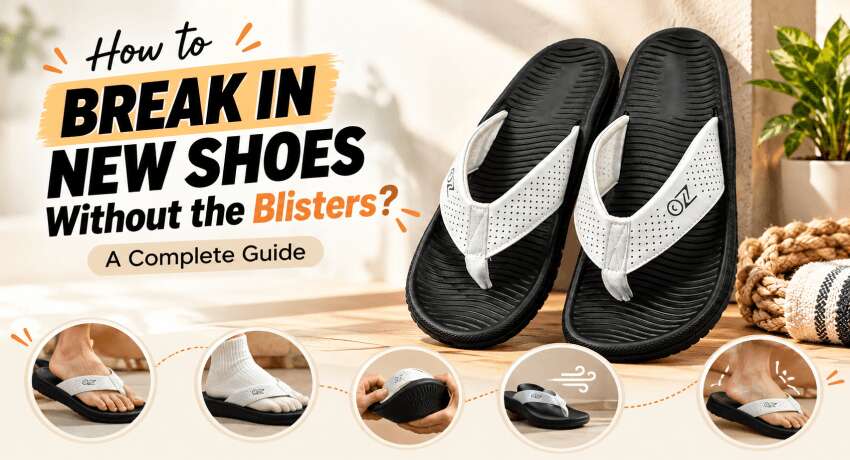
Buying a new pair of shoes is always exciting. Whether you have picked up stylish sneakers, formal leather shoes, running shoes, or comfortable everyday footwear, you probably cannot wait to wear them. But there is one common problem that can spoil the experience: blisters.
You put on your new shoes, walk around for a while, and everything feels fine. Then, after a few hours, you notice a painful spot on your heel, redness around your toes, or a burning sensation along the sides of your feet. By the end of the day, even a short walk can feel uncomfortable.
The good news is that you can break in new shoes gradually and reduce the risk of blisters without damaging the footwear or hurting your feet. The key is to understand where friction occurs, choose the right socks, wear your shoes for short periods, and address uncomfortable pressure points before they become painful.
In this guide, we will explain how to break in new shoes safely, what to do if your shoes feel tight, which common mistakes to avoid, and how to protect your feet while enjoying your new footwear.
1. Why Do New Shoes Cause Blisters?
Blisters usually develop when repeated friction damages the outer layers of the skin. Pressure, moisture, heat, and repetitive movement can make the problem worse.
When you wear new shoes, the materials may not yet have adapted to the shape and movement of your feet. Stiff heel counters, tight toe boxes, rough seams, and inflexible soles can rub against your skin as you walk.
For example, a new pair of leather formal shoes may rub against the back of your heel because the heel counter feels stiff. Running shoes might cause friction around the toes if they are too narrow or if your feet slide forward during exercise.
Several factors contribute to blisters:
- Friction: Repeated rubbing between the shoe and your skin is the main cause.
- Poor fit: Shoes that are too tight or too loose can create pressure and rubbing.
- Moisture: Sweat and damp socks can increase friction and soften the skin.
- Stiff materials: New leather, synthetic uppers, and rigid heel counters may feel uncomfortable initially.
- Long first wear: Walking for several hours in unfamiliar shoes gives friction more time to damage the skin.
- Incorrect socks: Thin, rough, or poorly fitting socks may fail to protect common pressure points.
It is important to remember that not every shoe needs a break-in period. Well-fitting sneakers and running shoes may feel comfortable immediately. If a pair causes persistent pain, pinching, or numbness, the issue may be the size or shape rather than stiffness.
2. Start by Checking Whether Your Shoes Fit Properly
Before trying to break in new shoes, make sure they are the correct size and shape for your feet.
Breaking in footwear does not mean forcing your feet to adapt to shoes that do not fit. Shoes that are too small, too narrow, or poorly shaped can continue causing discomfort no matter how long you wear them.
What should you check?
Toe room: Your toes should have enough space to move naturally without being squeezed together.
Heel fit: Your heel should feel secure. A little movement may be normal in some footwear, but excessive slipping can cause friction.
Width: The sides of your feet should not feel compressed, and the shoe should not press painfully against your little toe or big toe joint.
Arch and sole comfort: The sole should support your foot comfortably without creating unusual pressure.
Walking comfort: Take a few steps indoors. Notice whether the shoe rubs, pinches, slips, or creates pressure when your foot bends.
For closed-toe shoes, a commonly used guideline is to leave approximately a thumb’s width of space in front of the longest toe, although the ideal amount varies by footwear design and foot shape.
Try shoes on later in the day when your feet may be slightly larger, especially if you plan to wear them for long periods.
If your toes feel cramped or your feet hurt immediately, consider exchanging the shoes for a better-fitting pair instead of relying on stretching or break-in techniques.
3. Wear Your New Shoes for Short Periods First
One of the simplest ways to reduce the risk of blisters is to introduce your new shoes gradually.
Instead of wearing them for an entire working day or a long shopping trip, start with short sessions at home. This gives you time to identify uncomfortable areas before they develop into painful blisters.
A simple break-in schedule

Day 1: 15–30 minutes
Wear the shoes indoors while doing light activities. Check whether the heel, toes, or sides of your feet experience rubbing.

Day 2: 30–60 minutes
If the first session was comfortable, extend the wearing time. Walk around the house and try normal movements such as climbing a few stairs.

Day 3: A short outdoor walk
Take a brief walk on a familiar route if the shoes feel comfortable indoors. Pay attention to any new pressure points.

Following days: Increase gradually
Extend the wearing time only if your feet remain comfortable. There is no need to follow a rigid schedule if the shoes already fit well.
This schedule is a practical starting point rather than a medically established timeline. Some shoes need very little adjustment, while others may remain uncomfortable despite several short sessions.
The most important rule is to stop if you notice pain, burning, or persistent rubbing. Do not continue wearing uncomfortable shoes simply because you expect them to soften.
4. Choose the Right Socks to Prevent Blisters
Socks create a protective layer between your skin and your shoes. The right pair can help manage moisture, reduce rubbing, and improve overall comfort.
However, thicker socks are not always better. If they make your shoes too tight, they can increase pressure and create new problems.
Which socks should you wear?
| Sock type | Main benefit | Best use |
|---|---|---|
| Moisture-wicking synthetic socks | Help move sweat away from the skin | Running, walking, and daily activities |
| Merino wool socks | Help regulate moisture and temperature | Hiking and extended outdoor wear |
| Smooth cotton-blend socks | Comfortable for everyday use | Casual shoes and short walks |
| Padded athletic socks | Add cushioning at common pressure points | Sneakers and sports footwear |
| Seamless or flat-seam socks | Reduce irritation around the toes | Sensitive feet and close-fitting footwear |
For longer walks and exercise, moisture-managing socks are often a useful choice. If your feet sweat heavily, carrying a spare pair can help keep them dry.
Make sure your socks fit properly. Socks that bunch up, slide down, or wrinkle inside your shoes can create friction just as easily as rough shoe materials.
For formal shoes, choose socks that provide adequate coverage around the heel and sides of the foot. Very low-cut socks may slip below the heel and expose the skin to rubbing.
5. Protect Your Heels and Other Common Pressure Points
You do not have to wait for a blister to appear before protecting your feet. If you know that a particular area tends to rub, use a protective barrier before wearing your new shoes.
Common blister-prone areas include:
- The back of the heel
- The sides of the big toe and little toe
- The ball of the foot
- The area above the toes
- The sides of the ankle
Useful ways to protect your skin
Blister-prevention tape: Apply suitable protective tape to clean, dry skin where rubbing is likely to occur. Make sure the tape lies smoothly without wrinkles.
Hydrocolloid blister dressings: These can help protect an existing blister or vulnerable area from further friction. Follow the product instructions, particularly if the skin is broken.
Moleskin padding: This can help reduce friction when applied correctly. Avoid placing thick padding directly over a painful pressure point if doing so makes the shoe tighter.
Heel grips: Adhesive heel grips may reduce slipping in some shoes. Choose a suitable size and ensure the shoe still fits comfortably.
Foot lubricant: An appropriate anti-friction balm may help reduce rubbing in certain situations. Use it sparingly and check that it will not damage the shoe lining or make your feet slide inside the footwear.
The right solution depends on the cause. If the shoe rubs because your heel repeatedly slips, a properly fitted heel grip or adjustment to the lacing may help. If the shoe is too narrow, padding will not solve the underlying problem.
6. How to Break In Different Types of Shoes
Different materials and shoe designs respond differently to wear. A technique that works for flexible sneakers may not be suitable for structured leather dress shoes or performance running shoes.
Leather formal shoes

Leather shoes can feel stiff around the heel and sides when new. Wear them indoors for short periods, use comfortable socks, and allow the leather to move naturally as you walk.
If a particular section remains uncomfortably rigid, a professional cobbler may be able to soften or stretch the relevant area.
Avoid soaking leather shoes in water or applying excessive heat with a hairdryer. These methods can damage the finish, adhesives, shape, or leather itself.
Sneakers and casual shoes

Many modern sneakers require little break-in time. Start by wearing them indoors and check whether the heel slips or the toe box feels cramped.
If the shoe has adjustable laces, experiment with a comfortable lacing pattern to improve heel security without squeezing the top of your foot.
If the cushioning feels comfortable but your toes are compressed, try a different width or model rather than assuming the upper will stretch enough.
Running shoes
Running shoes should generally feel comfortable from the beginning. You may need a few short walks or easy runs to become familiar with their fit, but painful friction is not something you should have to tolerate.
Check that your toes have sufficient room, your heel is secure, and the shoe accommodates your foot during movement.
Avoid testing brand-new running shoes for the first time during a long run, race, or intense workout. Short, easy sessions give you an opportunity to identify problems before they become more serious.
Hiking boots

Some hiking boots, especially those with stiff uppers, may require gradual wear before they feel comfortable. Start with short walks, wear the socks you plan to use while hiking, and test the boots on gentle terrain.
Pay particular attention to heel movement and pressure around the toes when walking downhill. Feet can slide forward during descents, increasing friction and pressure.
Do not begin a long hike with boots that have not been tested. If the fit remains painful, consult the retailer or a footwear professional.
High heels and dress shoes

High heels can concentrate pressure on the forefoot and place additional stress on the toes. Wear them for short periods indoors, check that your toes are not squeezed, and consider suitable cushioning if it does not make the fit too tight.
A heel that is too high or a toe box that is too narrow may remain uncomfortable regardless of how often you wear it. Choose a different design if pain or pressure persists.
7. Can You Stretch New Shoes at Home?
Sometimes. Certain materials can accommodate small adjustments, but stretching is not a substitute for buying the correct size.
Before trying a stretching method, check the manufacturer’s care guidance and consider whether the shoe’s material can tolerate it.
| Method | Potential benefit | Important limitation |
|---|---|---|
| Wearing shoes for short periods | Allows flexible materials to move naturally | Will not correct a fundamentally poor fit |
| Adjustable shoe stretcher | Can gently widen certain areas | Incorrect use may distort the shoe |
| Professional cobbler | Can target a specific pressure point | Not every material or design can be stretched |
| Thicker socks | May help in some loose-fitting shoes | Can increase tightness and friction |
| Heat or water | Sometimes suggested in DIY advice | May damage materials, adhesives, or shoe shape |
For leather shoes that are slightly tight in a particular area, a cobbler can assess whether careful stretching is possible. Synthetic materials and shoes with complex bonded constructions may respond differently.
Avoid aggressive stretching techniques, freezing bags of water inside your shoes, or applying high heat without manufacturer approval. These methods can damage the footwear or make the fit less predictable.
If your toes are cramped, your foot extends beyond the sole, or the shoe causes pain when you stand, exchanging it for the correct size is usually the better option.
8. What Should You Do If You Feel a Blister Starting?
Early warning signs include redness, warmth, tenderness, burning, or a sensation that your skin is being rubbed repeatedly.
Do not ignore these signals. Continuing to walk in the same shoes can turn a small irritated area into a painful blister.
Follow these steps:
- Stop and inspect your feet. Remove the shoe and sock to identify the area causing friction.
- Reduce the rubbing. Adjust the fit or switch to more comfortable footwear.
- Protect the affected area. Use an appropriate blister dressing or protective covering according to its instructions.
- Keep the area clean. Avoid unnecessary friction and follow suitable wound-care guidance if the skin is damaged.
- Give your feet time to recover. Do not resume wearing the shoes for long periods while the area remains painful.
If a blister has formed, avoid deliberately popping it. The skin covering the blister helps protect the underlying tissue.
Seek medical advice if you notice spreading redness, increasing warmth, pus, worsening pain, or fever. People with diabetes, reduced circulation, or reduced sensation in their feet should seek professional advice early, even for seemingly minor foot injuries.
9. Common Mistakes to Avoid When Breaking In New Shoes
Some popular break-in tricks can make footwear less comfortable or increase the risk of injury. Wearing new shoes all day immediately: Long periods of friction leave little opportunity to identify and correct pressure points.
Assuming pain is normal: New shoes may feel different, but sharp pain, numbness, or persistent rubbing should not be ignored. Using excessively thick socks: Thick socks can crowd the toe box and increase pressure.
Applying direct heat: High heat can damage leather, synthetic uppers, glue, and other shoe components.
Ignoring loose heels: Repeated heel movement can create friction even if the shoe length seems correct.
Stretching shoes aggressively: Forcing the material can distort the shape without fixing the underlying fit problem.
Trying new shoes on a long trip: A long day of walking makes it harder to respond quickly when discomfort starts.
Using painkillers to tolerate poor-fitting shoes: Masking pain does not address the cause and may allow an injury to worsen.
A good break-in process should make footwear feel progressively more comfortable, not require you to tolerate increasing pain.
10. Extra Tips for Keeping Your Feet Comfortable
A few simple habits can make a noticeable difference when wearing new footwear.
- Try shoes on with the right socks. Use the same type of socks you expect to wear regularly with the shoes.
- Check both feet. Feet can differ slightly in length and width, so make sure the shoes fit your larger foot comfortably.
- Keep your feet dry. Change damp socks and allow footwear to dry fully between wears.
- Use appropriate lacing. Adjust the laces to secure the heel without creating pressure across the top of your foot.
- Inspect the shoe lining. Rough seams, loose material, or manufacturing defects can cause rubbing.
- Alternate footwear when possible. Switching to comfortable shoes gives irritated skin time to recover.
- Choose the right shoe for the activity. Walking shoes, running shoes, hiking boots, and formal shoes have different design priorities.
If you frequently develop blisters in the same place despite wearing well-fitting shoes, consider speaking with a podiatrist or other qualified healthcare professional. Foot shape, gait, skin conditions, and other factors may contribute to repeated friction.
Frequently Asked Questions (FAQs)
1. How long does it take to break in new shoes?
It depends on the shoe type, material, and fit. Flexible sneakers may feel comfortable immediately, while some structured leather shoes or hiking boots may need several short wearing sessions. There is no universal break-in period. Persistent pain is a reason to reassess the fit rather than continue wearing the shoes.
2. How can I break in new shoes without getting blisters?
Start by checking the fit, wearing the shoes for short periods, choosing suitable socks, and protecting areas prone to rubbing. Stop if you notice burning or redness, and correct the source of friction before wearing the shoes again.
3. Should new shoes feel tight at first?
They should feel secure, not painfully tight. Your toes should have room to move, and the shoe should not pinch or compress the sides of your feet. Some materials may soften slightly with wear, but you should not depend on stretching to fix a poor fit.
4. Do thicker socks prevent blisters?
Not always. Padded or moisture-wicking socks can help reduce friction in suitable footwear, but excessively thick socks may make shoes too tight. Choose socks that fit smoothly and suit the shoe and activity.
5. Is it safe to use a hairdryer to soften new shoes?
It is generally best to avoid direct, high heat unless the manufacturer specifically recommends a suitable method. Heat can damage leather finishes, synthetic materials, adhesives, and shoe construction. Gradual wear or professional stretching is usually a safer choice.
6. Can I wear new shoes for a full day at work?
If the shoes fit well and feel comfortable, you may be able to. However, it is sensible to test unfamiliar footwear for shorter periods first, especially if you will spend most of the day standing or walking. Bring a comfortable alternative until you know how the shoes perform.
7. What is the best way to stop heel blisters?
Check that the heel fits securely without excessive slipping. Appropriate socks, blister-prevention tape, or a suitable heel grip may help. If the heel continues to rub despite these adjustments, the shoe’s shape may not suit your foot.
8. Should I pop a blister caused by new shoes?
Generally, no. The blister’s outer skin helps protect the area underneath. Keep it clean, protect it from further friction, and allow it to heal. Seek medical advice if you notice signs of infection or have a condition that increases the risk of foot complications.
Conclusion
Breaking in new shoes without blisters is mainly about choosing the right fit, introducing the footwear gradually, and addressing friction before it damages your skin.
Start with short wearing sessions, use comfortable socks, protect vulnerable areas, and pay attention to how your feet feel. Different shoes behave differently, so leather dress shoes, sneakers, running shoes, and hiking boots may require different approaches.
Most importantly, do not force your feet to adapt to shoes that cause pain. A properly fitting pair should support your feet comfortably, and persistent pinching, numbness, or rubbing may mean you need a different size or design.
With a little preparation and patience, you can enjoy your new shoes while keeping your feet comfortable, healthy, and blister-free. Is this conversation helpful so far?