The monsoon brings welcome relief from the summer heat, but it also creates a few everyday challenges, especially when it comes to choosing the right footwear. One minute you are walking to work under cloudy skies, and the next you are stepping through puddles, slippery streets, or muddy footpaths. Shoes that feel perfect in dry weather can quickly become uncomfortable when they are soaked, heavy, or difficult to dry.
Wearing the wrong footwear during the rainy season can lead to wet socks, unpleasant odours, skin irritation, and an increased risk of slipping. That is why choosing suitable monsoon footwear is about more than simply keeping your shoes clean. You need a combination of water resistance, grip, breathability, comfort, and easy maintenance.
The best monsoon footwear keeps your feet comfortable, provides reliable traction on wet surfaces, and dries quickly after exposure to rain. Whether you commute to work, attend college, travel frequently, or enjoy outdoor activities, the right pair can make rainy days much easier to manage.
In this guide, we will explore the best footwear options for the monsoon, explain which materials work well in wet weather, compare different styles, and share practical tips for keeping your feet dry, comfortable, and healthy throughout the rainy season.
1. Why Choosing the Right Monsoon Footwear Matters
During the rainy season, your footwear faces conditions that are very different from those of summer or winter. Water, mud, humidity, and slippery surfaces can affect both comfort and safety.
For example, wearing canvas sneakers during heavy rain may leave you with soaked socks for the rest of the day. Similarly, smooth-soled sandals may become slippery when you walk across wet tiles or polished floors.
Here are the main reasons why monsoon footwear deserves special attention.
Better protection from water
Water-resistant or waterproof footwear helps reduce the amount of rainwater that reaches your feet. This is particularly useful when walking through puddles, commuting to work, or travelling during heavy rainfall.
Improved grip on wet surfaces
Wet roads, tiled floors, and stone pathways can become slippery. Footwear with a suitable rubber outsole and a well-designed tread pattern can help improve traction.
However, no shoe can guarantee that you will not slip. Walking carefully remains essential, particularly on moss-covered steps, polished stone, and uneven surfaces.
Greater everyday comfort
Lightweight footwear is easier to wear during long commutes and everyday errands. Quick-drying materials can also reduce the discomfort associated with damp shoes.
Better foot hygiene
Warm, damp footwear can encourage the growth of fungi and bacteria. Shoes that dry thoroughly between uses help maintain a healthier environment for your feet.
Longer footwear lifespan
Rainwater, mud, and prolonged moisture can damage certain materials, weaken adhesives, and cause unpleasant odours. Choosing suitable footwear and caring for it properly can help extend its useful life.
2. Best Types of Footwear for the Monsoon
Not every pair of shoes is designed for wet conditions. Some styles work well for short errands, while others are more appropriate for commuting, travelling, or spending long hours outdoors.
The best choice depends on how much rain you encounter, how far you walk, and whether you need protection, breathability, or formal styling.

1. Rubber sandals
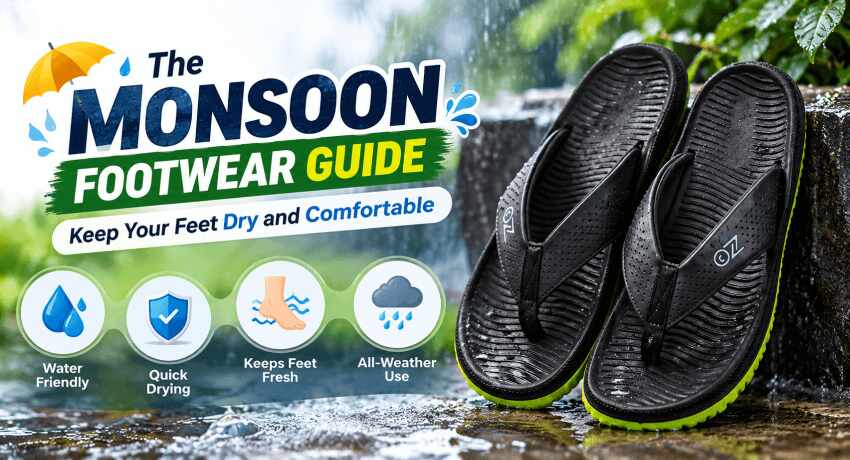
Rubber sandals are practical for everyday errands, short walks, and casual outings during the monsoon. They are generally easy to wash, lightweight, and quick to dry.
Best for: Short commutes, local shopping, and casual wear.
What to check: Choose a design with a secure fit and textured sole. Avoid smooth footbeds that become slippery when wet.

2. Water-resistant slip-on shoes
Slip-on shoes are convenient when you need footwear that is easy to put on and remove. Water-resistant versions can work well for short urban commutes and daily activities.
Best for: Office commutes, errands, and everyday city use.
What to check: Make sure the upper resists rain and the sole provides sufficient grip. Ordinary slip-on shoes are not automatically waterproof.

3. Rain boots
Rain boots are useful when rainfall is heavy or when you need to walk through muddy paths and standing water. Many designs provide a waterproof exterior that protects the feet and lower legs.
Best for: Heavy rain, muddy areas, gardening, and outdoor chores.
What to check: Look for a comfortable fit, dependable traction, and enough room for your toes. Tall boots may become warm during humid weather.

4. Quick-drying walking shoes
Quick-drying walking shoes are useful for people who spend considerable time on their feet. Some have breathable mesh uppers that allow moisture to escape and dry faster than heavier footwear.
Best for: Walking, daily commuting, and travel in changeable weather.
What to check: Mesh shoes are usually not waterproof. Choose them when rapid drying and ventilation matter more than keeping every drop of water out.

5. Waterproof sneakers
Waterproof sneakers can offer a useful balance of coverage, cushioning, and protection from rain. They are suitable for people who prefer a closed-shoe design instead of sandals.
Best for: Daily commuting, sightseeing, and moderate outdoor activity.
What to check: Waterproof membranes may reduce ventilation, so choose a comfortable fit and allow the shoes to dry thoroughly after use.

6. Water-resistant casual loafers
Water-resistant loafers can be useful for people who need a neat appearance without wearing formal leather shoes in the rain.
Best for: Casual offices, meetings, and short city commutes.
What to check: Avoid untreated suede or delicate leather in wet conditions. Ensure the sole offers grip rather than prioritising appearance alone.
3. How to Choose the Best Monsoon Footwear
The right pair should suit both your daily routine and the weather conditions you usually encounter. Instead of choosing footwear based only on appearance or price, consider these important features.
A. Water resistance and waterproofing
Water-resistant footwear helps repel light rain and splashes, while waterproof footwear is designed to prevent water from passing through under specified conditions.
These terms are not interchangeable. A water-resistant sneaker may be fine for a brief walk in drizzle but may become soaked during heavy rain.
If your commute regularly involves standing water, look for waterproof construction and a design that provides adequate coverage. Keep in mind that water may still enter through the opening of a shoe or boot, even when the material itself is waterproof.
B. Non-slip soles
Traction is one of the most important features of monsoon footwear.
Look for rubber outsoles with well-designed tread patterns rather than smooth, hard soles. A flexible outsole that maintains contact with the ground may also improve comfort during everyday walking.
However, tread appearance alone does not prove that a shoe is slip-resistant. If possible, check the manufacturer’s traction information and choose footwear suited to the surfaces you regularly encounter.
C. Lightweight construction
Heavy footwear can feel tiring when you need to walk long distances or navigate crowded streets.
Lightweight sandals, walking shoes, and appropriately designed rain boots can make everyday movement easier. Nevertheless, do not sacrifice secure fit, cushioning, or grip just to save weight.
D. Quick-drying materials
Quick-drying materials are especially useful in humid climates, where shoes may take a long time to dry completely.
Synthetic fabrics, mesh uppers, and rubber components can be practical, although their performance varies by construction. Closed waterproof shoes may keep rain out more effectively but can take longer to dry internally if water enters through the opening.
E. Comfortable fit
Your feet may swell slightly during the day, and wet conditions can make a poor fit more noticeable.
Choose footwear that holds your feet securely without squeezing your toes. Sandals should not slide around excessively, and closed shoes should have enough room for natural toe movement.
If you plan to wear socks, try the shoes with the type of socks you intend to use.
4. Monsoon Footwear Comparison: Which Option Is Best for You?
Different footwear styles serve different purposes. The following table compares common choices for rainy weather.
| Footwear type | Water protection | Grip potential | Drying and maintenance | Best use |
|---|---|---|---|---|
| Rubber sandals | Good against splashes; limited coverage | Depends on outsole and footbed | Usually easy to clean and dry | Short errands |
| Rain boots | High when properly designed and fitted | Depends on tread and material | Exterior is easy to clean; interior may take longer to dry | Heavy rain and mud |
| Quick-drying mesh shoes | Low to moderate | Depends on outsole | Often dry relatively quickly | Walking and travel |
| Waterproof sneakers | High when construction is intact | Depends on outsole | Interior may dry slowly | Daily commuting |
| Water-resistant loafers | Varies by material | Depends on outsole | Requires material-specific care | Casual office wear |
| Traditional leather shoes | Low unless specially treated | Depends on outsole | Needs careful drying and conditioning | Dry-weather or limited-rain use |
Which is the best overall choice?
For short everyday errands, well-fitting rubber sandals with a secure, textured sole can be convenient. For commuting in heavy rain, waterproof shoes or rain boots may offer better protection. For long walks, prioritise secure fit, cushioning, and dependable traction alongside water protection.
There is no single best monsoon shoe for everyone. The ideal choice depends on rainfall, walking distance, road conditions, and your personal comfort.
5. Best Materials for Rainy-Season Footwear
The material of your footwear affects how it handles water, heat, odour, and everyday wear.
Rubber
Rubber is widely used in rain boots, sandals, and outsoles because it resists water and is easy to clean.
Benefits:
- Suitable for wet conditions
- Generally easy to maintain
- Available in lightweight and flexible designs
Limitations: Some rubber footwear can become warm or uncomfortable during long periods of wear. Smooth rubber soles may also lack adequate traction.
EVA foam
Ethylene-vinyl acetate, commonly known as EVA, is a lightweight material often used in casual sandals and footwear midsoles.
Benefits:
- Lightweight construction
- Soft cushioning in many designs
- Easy-care options are widely available
Limitations: EVA footwear varies in grip and durability. Some lightweight designs may feel unstable or slippery on wet surfaces, so outsole texture and footbed design matter.
Synthetic mesh
Mesh uppers are common in walking shoes and athletic footwear.
Benefits:
- Good ventilation in many designs
- Often lightweight
- Can dry faster than some heavier materials
Limitations: Ordinary mesh allows water to pass through easily. It is more appropriate when breathability and quick drying are priorities than when complete rain protection is needed.
Treated leather
Certain leather shoes have water-repellent treatments that help resist light rain.
Benefits:
- Smart, polished appearance
- Can be durable with proper care
- Suitable for some work and formal settings
Limitations: Leather is not automatically waterproof. Prolonged exposure to water can damage its finish or shape, and untreated leather requires careful maintenance.
Waterproof membranes
Some shoes use waterproof membranes between the upper and lining to reduce water penetration.
Benefits:
- Useful for wet commutes and outdoor activities
- Can provide protection without using a fully rubber outer construction
- Often suitable for closed-shoe designs
Limitations: These shoes can feel warmer than highly ventilated footwear. Waterproof performance also depends on the entire shoe construction, not just the membrane.
6. How to Keep Your Feet Dry and Comfortable During the Monsoon
Even the right footwear cannot solve every problem if your daily habits leave your feet wet for hours. A few simple precautions can make a noticeable difference.
Choose socks carefully
If you wear closed shoes, select socks that manage moisture effectively. Synthetic moisture-wicking fabrics and suitable wool blends can help move sweat away from your skin.
Avoid socks that bunch up or become heavily saturated. Carrying an extra pair is useful if you commute for long periods or expect heavy rainfall.
Dry your feet after getting wet
When you reach your destination, remove wet footwear if practical. Wash or rinse muddy feet when needed and dry them carefully, particularly between the toes.
Do not put damp socks back on if you have a dry pair available.
Avoid wearing wet shoes for extended periods
Prolonged dampness can soften the skin and contribute to irritation. If possible, keep a spare pair of shoes at work or allow your footwear to dry before wearing it again.
Use comfortable, secure footwear
Loose sandals can slide around when wet, while tight shoes may create pressure and rubbing. Choose a pair that stays securely in place without pinching.
Carry a small rainy-day kit
A useful monsoon kit can include:
- A spare pair of socks
- A small towel
- A lightweight shoe bag
- Blister-prevention tape
- A compact umbrella or rain cover
These items are particularly useful for students, office commuters, and people who spend much of the day travelling.
7. How to Care for Monsoon Shoes and Make Them Last Longer
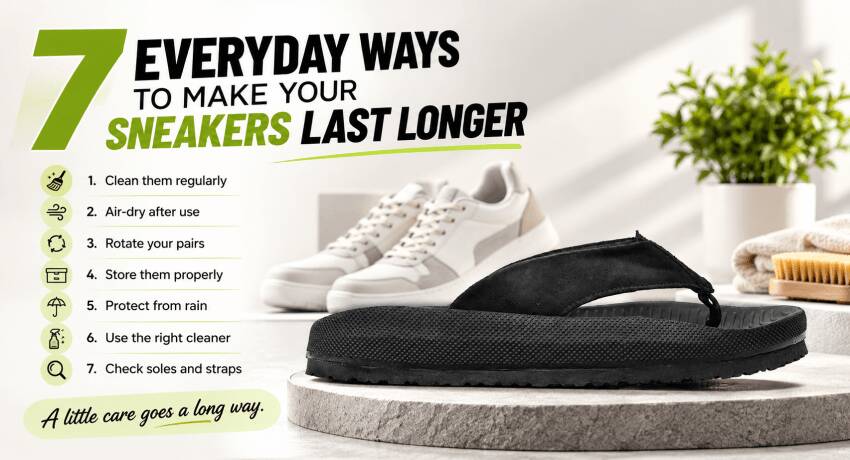
Rainy weather can shorten the life of footwear if mud, moisture, and dirt are left untreated. Proper cleaning and drying help maintain the materials and reduce unpleasant odours.
Step 1: Remove mud and dirt
After returning home, wipe away visible mud with a soft cloth or brush suitable for the shoe material. For washable rubber sandals, use water and mild soap when appropriate.
Avoid harsh cleaning products that could damage coatings or adhesives.
Step 2: Remove insoles where possible
If the insoles are removable, take them out so that both the insoles and the inside of the shoes can dry more effectively.
Check the manufacturer’s care instructions before washing them.
Step 3: Allow shoes to air-dry
Place footwear in a well-ventilated area away from direct heat. Stuffing shoes lightly with absorbent paper can help draw out moisture, but replace the paper when it becomes damp.
Avoid placing wet shoes directly under intense sunlight, next to a heater, or in front of a high-temperature hairdryer. Excessive heat can deform materials or weaken adhesives.
Step 4: Control odours
Odours often develop when sweat and moisture remain trapped inside footwear.
Allow shoes to dry fully between wears, clean removable insoles when permitted, and use a suitable shoe deodoriser if necessary. Fragrance alone will not solve an underlying moisture problem.
Step 5: Inspect the soles
Check for worn tread, loose sections, cracks, or peeling outsoles. Worn soles may provide less traction, which is particularly concerning during the rainy season.
Replace footwear when damage affects its fit, stability, or safety.
8. Common Monsoon Footwear Mistakes to Avoid
Some footwear choices may look convenient at first but create problems once you start walking in wet weather.
Wearing smooth-soled sandals: They may become slippery on wet tiles and polished surfaces. Choose footwear with suitable traction.
Using expensive leather shoes in heavy rain: Unless specifically designed and cared for for wet conditions, delicate leather footwear can become stained or damaged.
Wearing damp shoes every day: Repeatedly putting on shoes that have not dried properly can contribute to odour and skin irritation.
Choosing footwear that is too loose: Loose sandals or slip-ons can move around on wet feet, increasing the risk of slipping and rubbing.
Assuming all waterproof shoes are breathable: Waterproof construction can reduce ventilation. Select footwear that balances rain protection with comfort for your climate and activity.
Ignoring worn-out soles: Even high-quality shoes lose performance when the outsole becomes smooth or damaged.
Walking carelessly through puddles: Puddles may hide potholes, uneven surfaces, sharp objects, or slippery patches. Walk cautiously and avoid deep or potentially contaminated water.
9. Monsoon Footwear Tips for Different Lifestyles
Your daily routine should influence your footwear choice just as much as the weather.
| Lifestyle | Recommended footwear | Practical tip |
|---|---|---|
| Office commuters | Water-resistant shoes or waterproof sneakers | Keep a spare pair of formal shoes at work |
| College students | Rubber sandals or quick-drying casual shoes | Carry spare socks during long days |
| Frequent travellers | Lightweight, quick-drying shoes | Choose a pair that works for both walking and changing weather |
| Outdoor workers | Work-appropriate waterproof footwear with suitable traction | Follow workplace safety requirements |
| Parents and caregivers | Secure sandals or comfortable water-resistant shoes | Prioritise stability and easy cleaning |
| Fitness enthusiasts | Activity-specific shoes suited to wet conditions | Avoid running on slippery surfaces in ordinary casual shoes |
| People walking long distances | Cushioned, well-fitting walking shoes | Prioritise fit and traction over appearance alone |
If your work requires safety footwear, do not replace it with ordinary sandals or casual rain shoes. Follow the relevant workplace safety requirements and select footwear designed for the hazards involved.
10. Foot Hygiene During the Monsoon: An Important Reminder
The monsoon can make foot hygiene more challenging because humidity, sweat, and damp footwear often occur together.
Keeping your feet clean and dry is particularly important if you frequently wear closed shoes or spend several hours outdoors.
Follow these simple habits:
- Wash your feet regularly and dry thoroughly between your toes.
- Change out of wet socks as soon as practical.
- Allow shoes to dry completely before wearing them again.
- Avoid sharing footwear, socks, or personal foot-care items.
- Keep small cuts and abrasions clean and protected.
- Seek medical advice if you develop persistent itching, peeling, cracks, swelling, or signs of infection.
Damp conditions can encourage fungal growth, but not every itchy or irritated foot condition is a fungal infection. Persistent symptoms deserve proper assessment rather than relying only on home remedies.
People with diabetes, poor circulation, or reduced sensation in their feet should take extra care and seek professional advice promptly if they develop foot wounds or concerning changes.
11. How to Choose Monsoon Footwear on a Budget
You do not necessarily need an expensive pair of shoes to stay comfortable during the rainy season. The most useful footwear is the one that meets your daily needs, fits correctly, and provides reliable grip.
Before buying, compare the following features:
| Feature | Why it matters | What to look for |
|---|---|---|
| Material | Determines water resistance and care requirements | Rubber, suitable synthetics, or treated materials |
| Outsole | Affects traction and durability | Textured tread and a secure feel |
| Fit | Helps prevent rubbing and instability | Adequate toe room and a secure heel or strap |
| Weight | Influences comfort during long walks | Lightweight construction without sacrificing support |
| Drying time | Matters when shoes get wet frequently | Materials and construction that are easy to dry |
| Durability | Affects long-term value | Strong seams, intact bonding, and a well-made sole |
| Maintenance | Determines how easy shoes are to clean | Simple care requirements suitable for your routine |
Instead of buying several pairs for different occasions, start with one reliable everyday pair and add specialised footwear if your routine requires it.
For example, a student may find that washable rubber sandals work well for short trips, while someone who walks several kilometres to work may benefit more from cushioned, quick-drying walking shoes.
The goal is to choose footwear based on practical use rather than appearance alone.
12. Frequently Asked Questions About Monsoon Footwear
1. Which footwear is best for the rainy season?
Rubber sandals, rain boots, and waterproof sneakers can all be useful, depending on your needs. Rubber sandals are convenient for short errands, rain boots suit muddy conditions, and waterproof sneakers can provide more coverage for daily commuting.
2. Are rubber sandals good for the monsoon?
Yes, rubber sandals can be practical because they are generally easy to clean and dry. However, choose a secure design with a textured outsole and a footbed that does not become excessively slippery when wet.
3. Can I wear sneakers during the monsoon?
Yes. Waterproof sneakers offer protection from rain, while quick-drying mesh sneakers can be suitable for lighter conditions when ventilation is important. Ordinary mesh sneakers may become soaked in heavy rain.
4. How can I dry wet shoes overnight?
Remove the insoles if possible, wipe away excess water, and place the shoes in a well-ventilated area. You can loosely fill them with absorbent paper and replace it when damp. Avoid high heat, which may damage the footwear.
5. Are waterproof shoes always better than quick-drying shoes?
Not necessarily. Waterproof shoes are useful when preventing water entry is the priority. Quick-drying shoes may be more comfortable in humid conditions or when occasional wetting is unavoidable. Choose according to your activity and local weather.
6. How can I prevent foot odour during the monsoon?
Keep your feet clean and dry, change damp socks, and allow footwear to dry fully between wears. Clean removable insoles when permitted and use suitable shoe deodorising products if needed.
7. What should I wear when walking through heavy rain?
Choose footwear designed for wet conditions, with suitable water protection and dependable traction. Avoid deep or potentially contaminated water, and walk carefully around puddles and slippery surfaces.
8. Are flip-flops safe during the monsoon?
Flip-flops may be convenient for short, casual trips, but loose straps and smooth soles can make walking on wet surfaces less secure. For longer walks or crowded streets, consider footwear that holds your feet more securely.
9. How often should I replace monsoon footwear?
There is no fixed replacement schedule. Replace footwear when the soles become worn, traction deteriorates, straps break, waterproof construction fails, or the shoe no longer fits securely.
10. How can I protect my feet from fungal infections during the rainy season?
Keep your feet clean and dry, change wet socks, and avoid repeatedly wearing damp footwear. If you develop persistent itching, peeling, cracking, or other symptoms, seek medical advice for an accurate diagnosis and appropriate treatment.
Conclusion
The monsoon does not have to mean spending every rainy day with wet socks, uncomfortable shoes, or slippery steps. With the right footwear and a few practical habits, you can move through the season more comfortably.
Choose footwear that suits your routine, whether that means rubber sandals for quick errands, rain boots for muddy conditions, or waterproof sneakers for daily commuting. Prioritise a comfortable fit, dependable traction, suitable water protection, and easy maintenance.
Remember that the best monsoon footwear is not necessarily the most expensive or the most waterproof. It is the pair that keeps your feet comfortable, provides appropriate protection, and suits the conditions in which you actually walk.
Clean your shoes after muddy outings, dry them thoroughly between wears, and pay attention to foot hygiene throughout the season. A little preparation can go a long way toward keeping your feet dry, comfortable, and ready for every rainy-day adventure.